Entry Price
$302.29
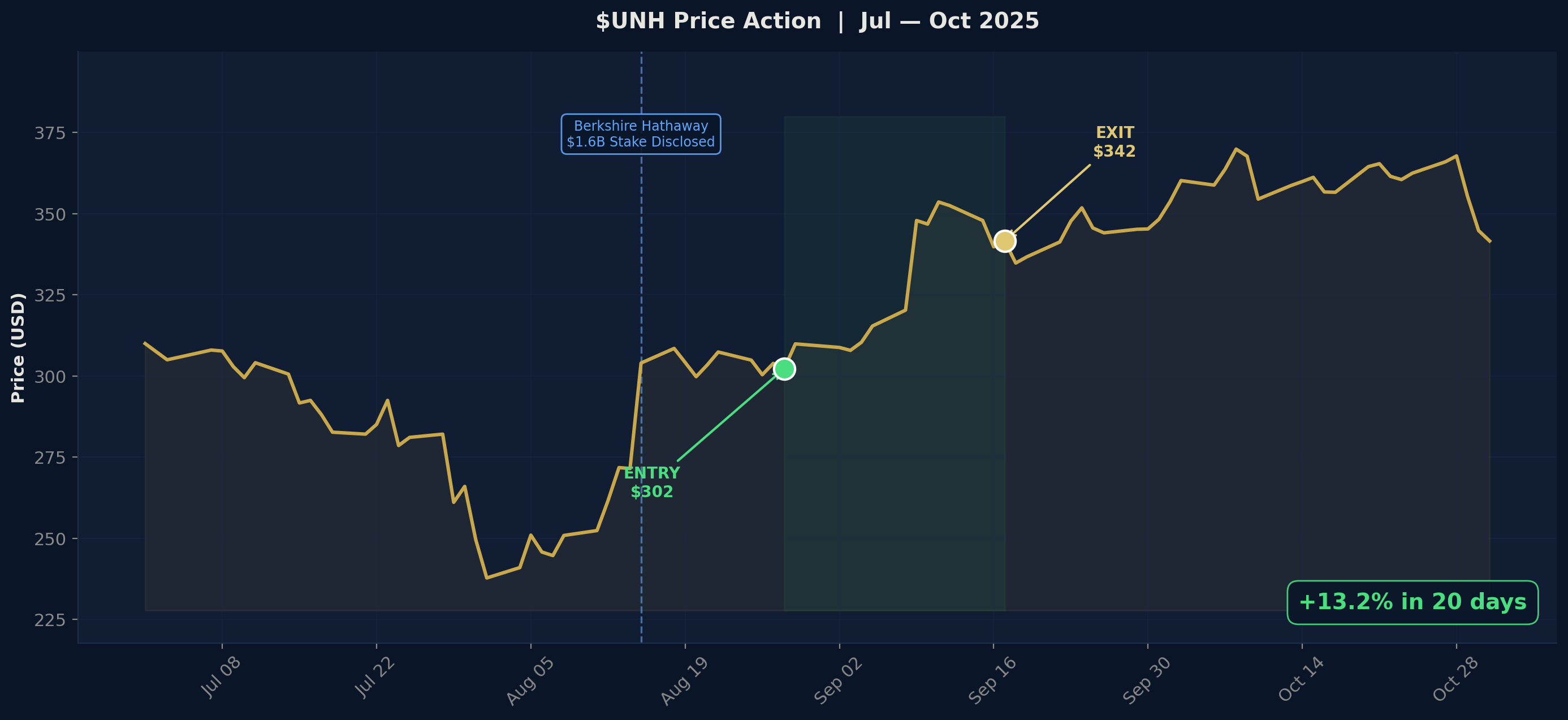
This memo documents a short-term, event-driven trade in UnitedHealth Group ($UNH) initiated in late August 2025. At the time, UNH was navigating an unprecedented crisis: the tragic murder of its UnitedHealthcare CEO, surging medical costs, and intensified regulatory scrutiny had driven the stock down over 50% from its 2024 highs. This confluence of negative catalysts created a climate of extreme fear, presenting what was assessed to be a significant market overreaction. The investment thesis was further validated by Berkshire Hathaway's newly disclosed $1.6 billion stake — a powerful institutional signal from one of the world's most respected value investors. The position was initiated at $302.29 on August 28, 2025, and successfully exited at $342.00 on September 17, 2025, capturing a +13.2% return in 20 days.
The market sentiment surrounding UnitedHealth Group in mid-2025 was overwhelmingly negative. The company was reeling from the murder of UnitedHealthcare CEO Brian Thompson in December 2024, an event that had erased over $60 billion in market value and triggered an unprecedented public backlash against the managed care industry.[1] This was compounded by industry-wide margin pressure from a surge in medical utilization rates (Medical Loss Ratio), a challenging regulatory environment for its core Medicare Advantage business, and a broader rotation out of defensive healthcare names. By August 2025, the stock had fallen to the low $300s from a 52-week high above $630 — a level not seen in over five years — as investors priced in a scenario of sustained earnings decline and permanent reputational damage.
The decision to initiate an event-driven position in UNH was predicated on three core tenets:
The precipitous 50%+ decline appeared to be a classic overreaction to headline risk. At ~$302, UNH was trading at a significant discount to its historical valuation multiples, with the market pricing in a worst-case scenario while ignoring the resilience of the underlying franchise.
On August 14, 2025, Berkshire Hathaway disclosed a new $1.6 billion stake acquired during Q2.[2] This represented a powerful vote of confidence from the world's most successful value investor, suggesting the long-term franchise value remained intact despite short-term noise.
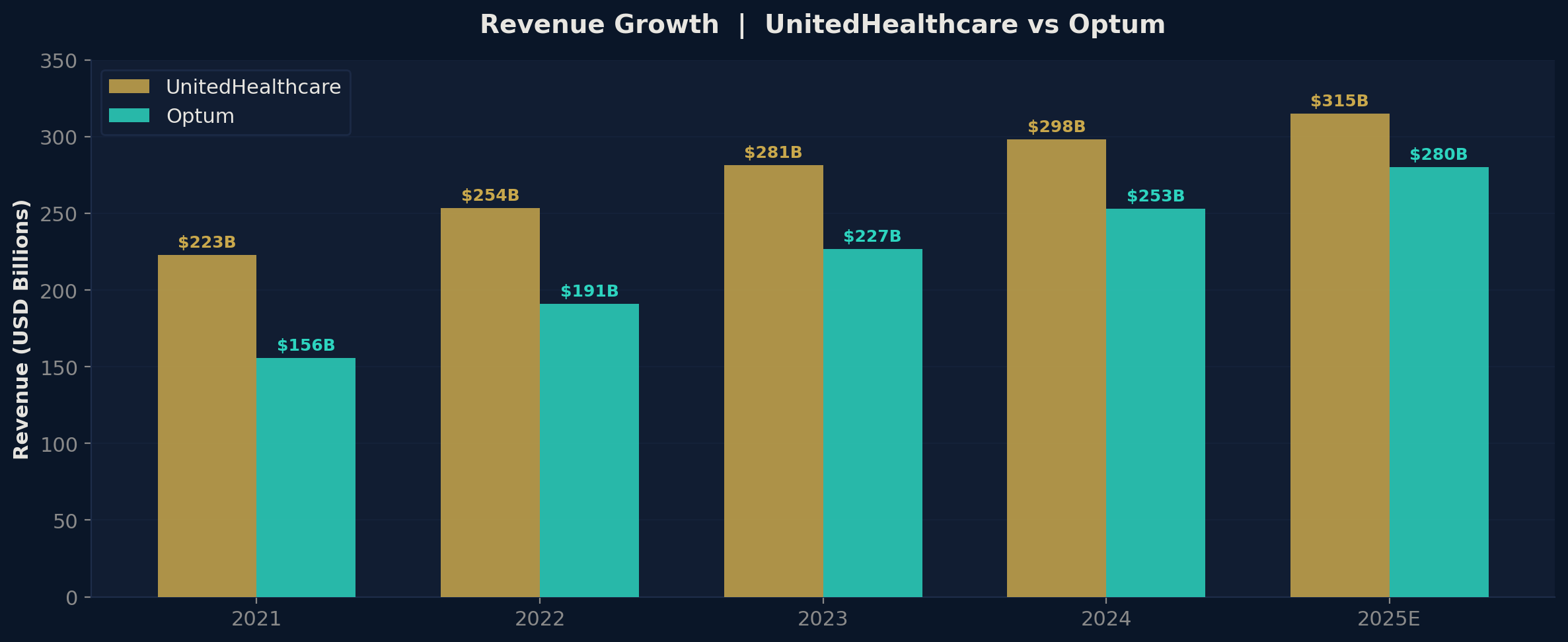
Beneath the negative headlines, UNH's Optum segment — encompassing care delivery, pharmacy benefits, and data analytics — continued to grow at double-digit rates, representing a durable growth engine the market was significantly undervaluing.
At the entry price of $302, UNH was trading at valuation levels not seen in over five years. The compression in multiples was severe and, in our assessment, disproportionate to the fundamental deterioration in the business.
| Metric | At Entry (Aug 2025) | 5-Year Average | Discount |
|---|---|---|---|
| Forward P/E | ~15.5x | ~19.0x | -18.4% |
| EV / EBITDA (LTM) | ~11.5x | ~15.9x | -27.7% |
| P/FCF | ~12.8x | ~17.2x | -25.6% |
| Dividend Yield | 2.8% | 1.4% | +100% |

A discounted cash flow analysis using conservative assumptions — 8% long-term revenue growth (below the 10-year average of ~12%), a terminal growth rate of 2.5%, and a WACC of 9.0% — yielded an intrinsic value estimate of approximately $410–$440 per share, representing 35–45% upside from the entry price. This provided a substantial margin of safety.
UnitedHealth Group operates through two primary segments: UnitedHealthcare (insurance) and Optum (health services). The dual-engine structure provides both scale and diversification, with Optum increasingly becoming the growth driver of the enterprise.
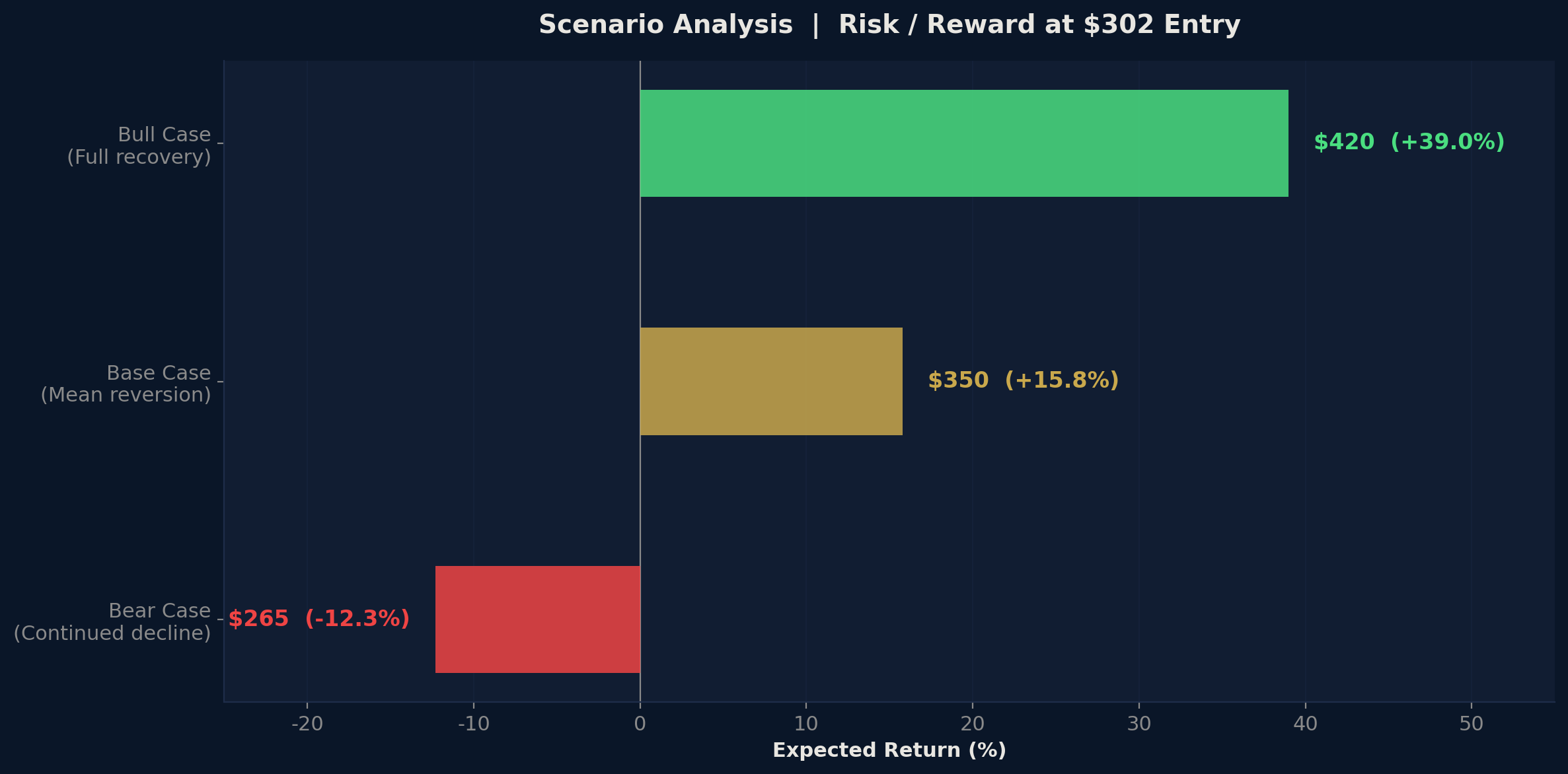
The position was initiated on August 28, 2025, at an average price of $302.29. This entry was deliberately timed — rather than chasing the initial 14% spike on the day of the Berkshire disclosure (August 15), the trade was executed after the stock had consolidated and pulled back over the following two weeks, offering a more favorable entry with a clearly defined risk level. The position was closed on September 17, 2025, at an average price of $342.00, as the stock rallied into key technical resistance. The objective was to capture the value unlocked by the shift in market sentiment, not to establish a long-term core holding.
"Be fearful when others are greedy, and greedy when others are fearful."
This trade in UnitedHealth Group serves as a case study in applying a contrarian, value-oriented framework to a short-term event-driven opportunity. By looking past the negative headlines and focusing on intrinsic value, institutional signals, and fundamental business strength, it was possible to identify and capitalize on a significant market dislocation — generating a +13.2% return in 20 days. The key lesson: when fear is at its peak and the business remains fundamentally sound, the risk/reward is often most favorable.